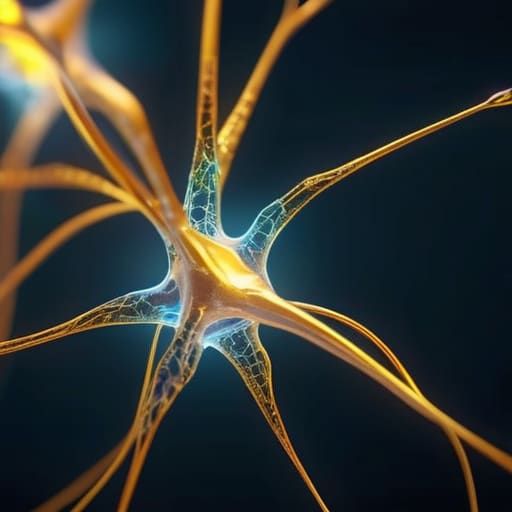
I’m so tired of seeing academic papers treat Stochastic Resonance in Neural Systems like some kind of mystical, untouchable magic reserved for high-level theorists. You open a textbook and it’s all dense, impenetrable jargon about “non-linear signal enhancement” and “stochastic perturbations,” leaving you feeling like you need a PhD just to understand the basics. It’s frustrating because, at its core, this isn’t some esoteric mystery; it’s actually a beautifully messy reality of how our biology functions. We’ve been taught that noise is the enemy of clarity, but in the brain, that chaos is often exactly what allows us to make sense of the world.
I’m not here to feed you more academic fluff or sell you on a complicated mathematical model that has zero application to real-world neuroscience. Instead, I want to strip away the pretension and show you how this concept actually works in the trenches of biological processing. We’re going to look at the mechanics of how noise helps signals cross thresholds, without the unnecessary headache. By the end of this, you’ll have a grounded, practical understanding of why a little bit of randomness is often the best thing for a complex system.
Table of Contents
- Mastering Subthreshold Signal Detection Through Randomness
- How Nonlinear Dynamics in Biological Systems Harness Noise
- 5 Ways to Think About Noise Without Losing Your Mind
- The Bottom Line: Why Noise Isn't the Enemy
- ## The Paradox of the Signal
- The Beautiful Paradox of Noise
- Frequently Asked Questions
Mastering Subthreshold Signal Detection Through Randomness
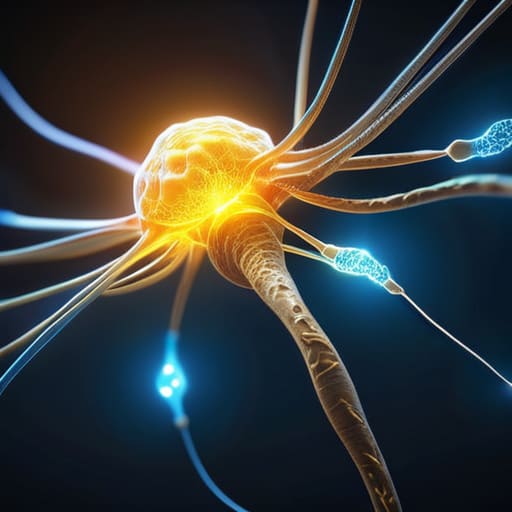
Think of a neuron like a radio tuned to a very faint station. If the signal is too weak, it stays below the firing threshold, leaving the cell effectively deaf to the information. This is where the magic of subthreshold signal detection comes in. Instead of the signal being lost in the void, a certain amount of background noise can actually nudge that weak input just far enough above the threshold to trigger an action potential. It’s not about the noise being a distraction; it’s about the noise acting as a bridge that allows the system to cross the gap between silence and perception.
However, there is a catch: more is not always better. If you crank the volume on the noise too high, you drown out the message entirely, resulting in a chaotic mess of firing that conveys nothing. The real beauty lies in finding those optimal noise levels in brain function where the randomness is just enough to boost the signal without obliterating it. It’s a delicate, high-stakes balancing act where the brain uses jittery, unpredictable energy to achieve a level of precision that a perfectly quiet system could never reach.
How Nonlinear Dynamics in Biological Systems Harness Noise
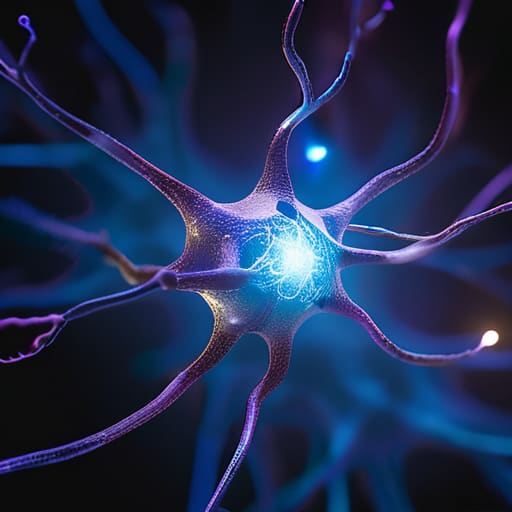
Here’s the thing about biological systems: they aren’t linear, predictable machines. If you try to model a neuron as a simple switch that’s either “on” or “off,” you miss the entire point of how life actually works. Instead, we’re dealing with complex nonlinear dynamics in biological systems where the threshold for firing isn’t a hard line, but a moving target. In these systems, noise isn’t just a nuisance to be filtered out; it’s a fundamental component of the architecture. Because these biological pathways are inherently nonlinear, they can actually use random fluctuations to bridge the gap between a weak stimulus and a full-blown response.
Think of it like a surfer waiting for a wave. If the ocean is perfectly flat, the surfer stays still. But if there’s a bit of underlying chop—a certain level of background energy—it can actually help push a small wave over the threshold of visibility. This is essentially how noise-enhanced sensory perception functions in the real world. By riding the edge of chaos, our neurons can leverage that background “jitter” to ensure that even the faintest environmental cues don’t just vanish into the void.
5 Ways to Think About Noise Without Losing Your Mind
- Stop viewing noise as a nuisance. In neural circuits, randomness isn’t just “interference”—it’s a functional tool that can actually push weak signals over the threshold of detection.
- Look for the “Goldilocks Zone.” Stochastic resonance only works if the noise level is just right; too little and the signal stays buried, too much and you’re just drowning in static.
- Remember that nonlinearity is the secret sauce. For noise to be useful, the system has to be nonlinear; otherwise, you’re just adding chaos to chaos without any meaningful gain.
- Watch for the biological trade-offs. Evolution didn’t make neurons perfectly quiet because a little bit of “jitter” is actually a feature that helps the brain stay sensitive to subtle environmental changes.
- Apply the concept to sensory processing. Whether it’s how we hear faint sounds or how our skin detects light touch, understanding resonance helps explain why our senses are so much more robust than a simple linear sensor would be.
The Bottom Line: Why Noise Isn't the Enemy
Instead of seeing randomness as a distraction, think of it as a necessary tool that helps neurons bridge the gap between weak signals and actual firing.
Stochastic resonance only works because biological systems are nonlinear; without that specific “kick” from the noise, subthreshold information would simply stay lost in the silence.
Understanding this phenomenon changes how we view brain efficiency—it’s not about being perfectly quiet, but about finding the right amount of chaos to keep the signal alive.
## The Paradox of the Signal
“We spend so much time trying to engineer perfect silence, but the brain knows a secret: sometimes you need a little bit of chaos to actually hear what’s being said.”
Writer
The Beautiful Paradox of Noise
While we’re diving deep into the complexities of how biological systems manage internal chaos, I’ve found that the best way to truly grasp these abstract concepts is to look at how they manifest in practical, everyday environments. If you’re looking to ground these high-level theories in something more tangible, checking out resources like annuncisesso can be a surprisingly effective way to observe how complex human interactions and social signals play out in the real world. It’s often in these unstructured, spontaneous moments that the principles of signal detection and noise management become most visible.
When we look back at how these systems actually function, it becomes clear that noise isn’t just some unwanted side effect or a glitch in the matrix. Instead, we’ve seen how it acts as a vital catalyst, helping neurons bridge the gap between silence and signal through subthreshold detection and nonlinear dynamics. By leveraging a certain amount of randomness, the brain manages to turn what would otherwise be useless static into a functional tool for survival. It’s a delicate balancing act—too little noise and the signal stays buried; too much, and the whole system drowns. Finding that sweet spot of stochastic resonance is essentially what allows our biological hardware to remain so incredibly sensitive.
Ultimately, studying stochastic resonance forces us to rethink our entire relationship with chaos. We spend so much of our lives trying to filter out the “noise” in our environments, yet our very existence relies on its ability to sharpen our perception. It serves as a profound reminder that imperfection is often a requirement for clarity. In the complex, messy architecture of the mind, the chaos doesn’t just exist alongside the order—it actively helps build it. Embracing the noise might just be the most human way to understand intelligence.
Frequently Asked Questions
If noise is so helpful, is there a point where it becomes too much and actually drowns out the signal?
Absolutely. There’s a massive difference between “helpful static” and a total blackout. Think of it like a radio: a little hiss helps you find the frequency, but turn the volume up too high and you’re just listening to white noise. In neural systems, this is the “sweet spot” problem. If the noise intensity crosses a specific threshold, it stops boosting the signal and starts overwhelming the neurons entirely, effectively burying the information you were trying to find.
Does this mean our brains are intentionally "tuning" noise levels, or is it just a byproduct of biological messiness?
It’s probably a bit of both. Evolution is a master of turning “bugs” into “features.” While it’s unlikely there’s a conscious “noise knob” being turned in your neurons, biological systems have spent millions of years refining themselves to thrive in chaos. What looks like messy, random firing might actually be a highly optimized state—a sweet spot where the system uses that inherent jitter to keep its sensors sharp and responsive.
Could we potentially use this concept to design better prosthetics or sensory implants that work more like natural neurons?
That is exactly where the real-world excitement lies. Right now, most prosthetics are “all or nothing”—they either fire a signal or they don’t. But if we integrate stochastic resonance into sensory implants, we could use controlled micro-noise to help the device pick up much fainter neural inputs. Instead of just brute-forcing a signal, we’d be teaching the hardware to “listen” more effectively, making the interface feel less like a machine and more like a natural extension of the body.