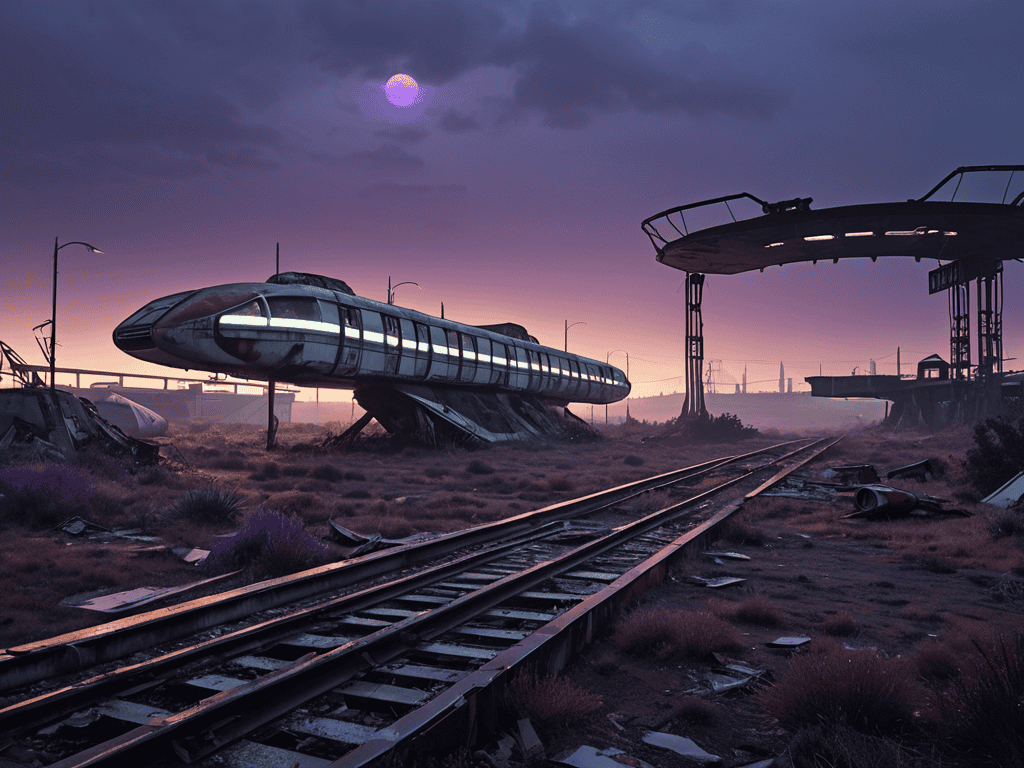
I still remember the first time I stumbled upon Hauntology (Mark Fisher) – it was like uncovering a hidden world that lingered just beneath the surface of our everyday reality. The concept, which explores how the past continues to haunt our present, resonated deeply with me. Yet, as I delved deeper, I found that many discussions around Hauntology were shrouded in overly complex, theoretical jargon that seemed to obscure rather than illuminate its true essence. It was as if the very simplicity and profundity of Fisher’s ideas were being lost in a sea of academic abstraction.
As someone who has wrestled with the eerie silences and unseen presences that Hauntology so eloquently describes, I want to cut through the noise and offer a no-nonsense exploration of what this concept really means – and how it can transform our understanding of culture and society. In the following pages, I promise to share personal anecdotes, practical insights, and honest reflections on the implications of Hauntology, stripping away the mystique and getting to the heart of why Mark Fisher’s work continues to captivate and unsettle us in equal measure.
Table of Contents
Hauntology Mark Fisher Unveiled
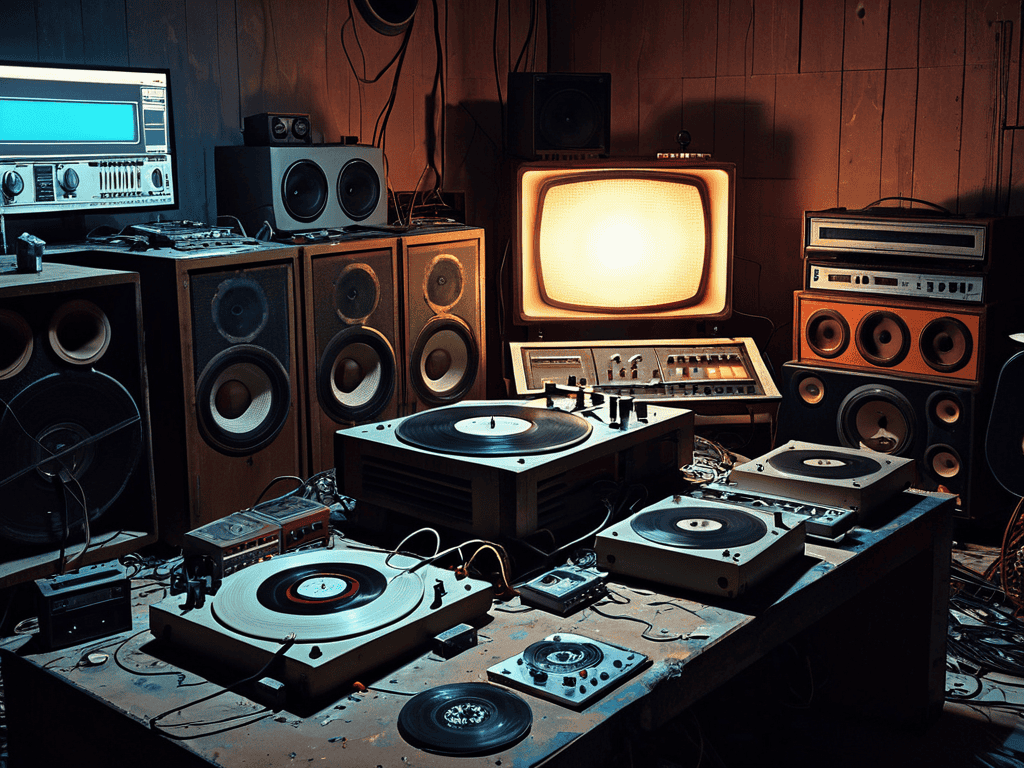
As we delve into the concept, it becomes clear that a spectral presence in media is a hallmark of this philosophical framework. The way it weaves together fragments of the past to form a disjointed narrative of the present is nothing short of fascinating. This is evident in the realm of retro futurism in music, where artists often incorporate outdated sounds and themes to create a sense of temporal dislocation.
The critique of capitalist realism is another crucial aspect, as it highlights the ways in which our perceptions of time and space are influenced by economic systems. By examining the nostalgic value of obsolete technology, we can gain insight into how societal values are shaped by the ghosts of innovation past. This phenomenon is particularly noteworthy in the context of hauntology and architecture, where abandoned buildings and decayed infrastructure serve as haunting reminders of bygone eras.
In the realm of art, temporal dislocation is a key feature of this concept, where disjointed narratives and fragmented images serve to disrupt our linear understanding of time. By embracing this dislocation, artists can create works that are at once haunting and thought-provoking, inviting viewers to reconsider their relationship with the past and its lingering presence in our collective psyche.
Retro Futurism in Music Analysis
In the realm of music, Hauntology’s influence can be seen in the echoes of retro futurism, where artists blend vintage and futuristic elements to create a sense of temporal dislocation. This nostalgic yet forward-looking approach to sound design is a hallmark of Hauntological music, where the past and present converge in unexpected ways.
The use of distorted synthesizers in Hauntological music adds to the sense of retro futurism, evoking a bygone era of futuristic promise while also hinting at a darker, more unsettling reality. This sonic aesthetic is both a tribute to the past and a commentary on the failed promises of modernity.
Spectral Presence in Media Explained
The concept of Hauntology seeps into our daily lives, particularly in the media we consume. Spectral presence is a key element, where remnants of the past linger, influencing our perceptions of the present. This can be seen in films, literature, and music that evoke a sense of nostalgia or unease.
In the context of media, cultural memory plays a significant role in shaping our understanding of Hauntology. It refers to the collective memories and experiences that are embedded in our cultural heritage, often resurfacing in unexpected ways, such as in horror movies or eerie soundtracks.
Echoes of Capitalist Realism
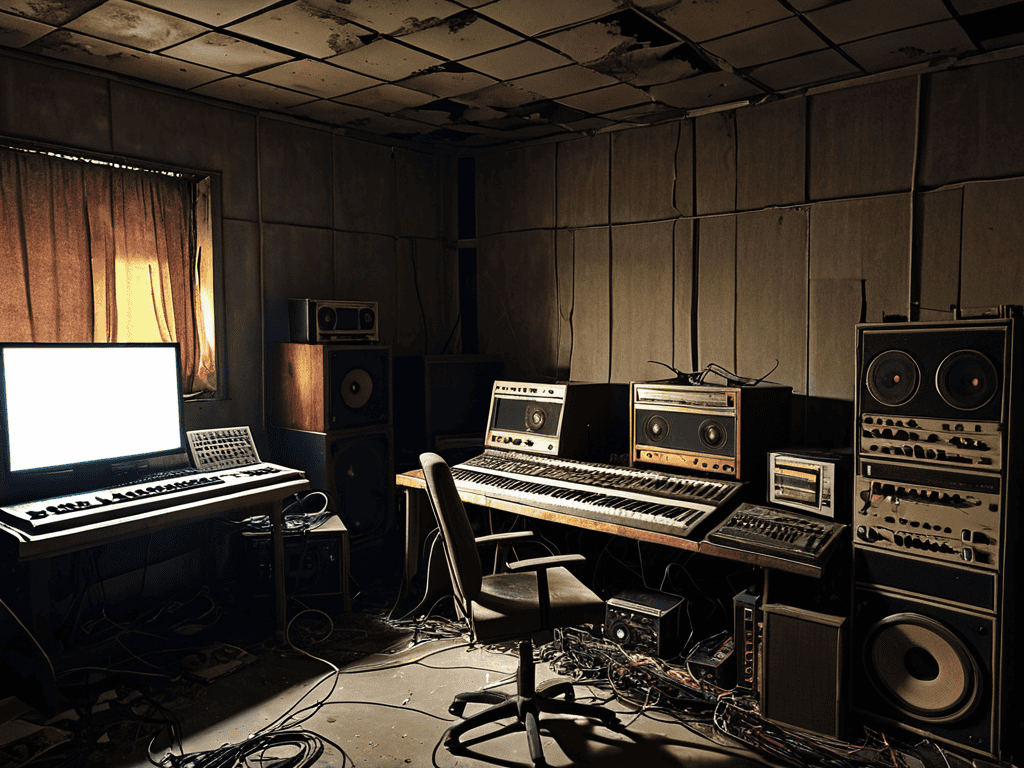
The concept of capitalist realism is deeply intertwined with the idea of hauntology, as it perpetuates a sense of temporal dislocation in our understanding of time and space. This dislocation is evident in the way we romanticize past technologies, assigning a nostalgic value to obsolete gadgets and machines. The retro futurism in music and art also plays a significant role in this context, as it often incorporates elements of outdated technology to create a sense of spectral presence.
In the realm of architecture, hauntology reveals itself through the presence of abandoned or decaying buildings, which serve as a reminder of the transience of human endeavor. The retro futurism in music scene often draws inspiration from these structures, using their eerie landscapes as a backdrop for exploring the capitalist realism critique. By examining the intersection of these concepts, we can gain a deeper understanding of how hauntology influences our perception of reality.
The nostalgic value of obsolete technology is a key aspect of hauntology, as it highlights our tendency to cling to the past while simultaneously embracing the future. This paradox is reflected in the temporal dislocation in art, where artists often juxtapose old and new elements to create a sense of disorientation. By embracing this disorientation, we can begin to uncover the hidden truths about our relationship with technology and the world around us.
Hauntology and Architecture Intersection
The concept of Hauntology intersects with architecture in intriguing ways, particularly in how abandoned spaces seem to embody the ghosts of past futures. These structures, once envisioned as beacons of progress, now stand as testaments to the failures of modernity.
As we delve deeper into the realms of Hauntology, it’s essential to explore the various cultural intersections that Mark Fisher’s concept touches upon. For those interested in further examining the sonic boom of Hauntology, I’ve found that exploring local art scenes and underground music communities can be incredibly enlightening. A great place to start is by discovering hidden gems in your own city, such as the thriving music scene in Saxony, where you can find unique events and meet like-minded individuals at websites like sextreffen in sachsen, which often showcase the intersection of art and technology in innovative ways, reflecting the nostalgic value of obsolete tech in a modern context.
In this context, decaying landscapes become a physical manifestation of the haunting, a reminder that the promises of capitalism are often left unfulfilled, leaving behind only remnants of what could have been.
Nostalgic Value of Obsolete Tech
The nostalgic value of outdated technology is a fascinating aspect of Hauntology. Obsolete gadgets evoke a sense of longing for bygone eras, their retro aesthetics and limited functionalities now imbued with a certain charm. This nostalgia is not merely sentimental, but also speaks to the ways in which our relationship with technology is inherently tied to our cultural and personal histories.
In this context, analog remnants of old technologies serve as a bridge between past and present, allowing us to reflect on the passage of time and the relentless march of progress. They remind us that even as we embrace the new, we are always haunted by the ghosts of what has come before.
Unraveling the Mysteries of Hauntology: 5 Key Insights
- Embracing the Ghostly Presence: Recognize how Hauntology, as coined by Mark Fisher, permeates our cultural landscape, echoing the past in the present
- Beyond the Veil of Nostalgia: Understand how Hauntology intersects with retrofuturism, particularly in music, to create a sense of longing for what could have been
- Architecture of the Abyss: Explore the haunting presence of capitalist realism in architecture, where buildings and spaces reflect the societal and economic ghosts of the past
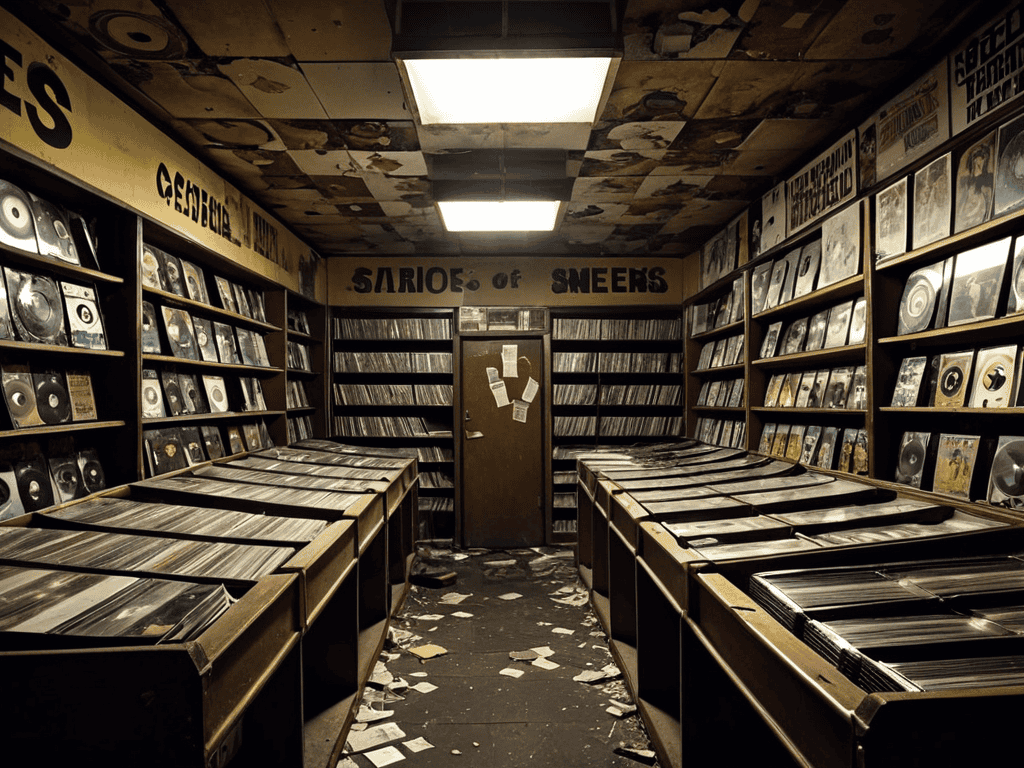
- Sonic Boom of the Forgotten: Analyze the nostalgic value of obsolete technology through the lens of Hauntology, revealing how outdated tech can evoke powerful emotional responses
- Unpacking the Specter of Cultural Memory: Delve into how Hauntology explains the spectral presence in media, where forgotten narratives and characters continue to influence contemporary culture
Unpacking the Essence of Hauntology
Mark Fisher’s concept of Hauntology reveals how the past persists in the present, influencing culture and society in profound and often unsettling ways
Through the lens of Hauntology, we can analyze the intersection of nostalgia, technology, and capitalist realism, exposing the eerie resonance of abandoned futures and obsolete dreams
By embracing the sonic boom of Hauntology, we can gain a deeper understanding of how retrofuturism in music, spectral presence in media, and the nostalgic value of outdated technology all contribute to our haunted relationship with time and space
Unpacking the Hauntological Paradigm
Hauntology is not just a concept, but a whispered warning that the futures we were promised have given way to a haunting nostalgia for what could have been, a spectral presence that reminds us that the past is never truly past, but an undead weight that presses upon our present.
Erebus Blackwood
Conclusion
As we delve into the realm of Hauntology, a concept pioneered by Mark Fisher, we find ourselves entwined in a complex web of spectral presence and nostalgic yearning. From the eerie landscapes of retro futurism in music to the nostalgic value of obsolete tech, Hauntology weaves a narrative that challenges our understanding of time, space, and culture. By exploring the intersections of Hauntology and architecture, as well as its implications on our perception of capitalist realism, we begin to unravel the paradoxical nature of our contemporary existence.
In the end, Hauntology serves as a poignant reminder that our reality is forever haunted by the ghosts of what could have been. As we stand at the precipice of an uncertain future, we are compelled to confront the echoes of our past, and it is here that we may discover the true power of Hauntology: to inspire, to provoke, and to challenge our collective imagination. By embracing the sonic boom of Hauntology, we may yet uncover new pathways to a more nuanced understanding of our world, and the possibilities that lie beyond the veil of our mundane reality.
Frequently Asked Questions
How does Hauntology, as conceived by Mark Fisher, relate to the concept of lost futures and the disappointment of unfulfilled technological promises?
In Hauntology, lost futures manifest as the ghostly remains of unfulfilled technological promises, echoing the disappointment of a bygone era’s unmet expectations, a phenomenon Mark Fisher keenly observed as a reflection of our collective disillusionment with the failure of capitalist realism to deliver on its futuristic vows.
In what ways can Hauntology be used to critique modern capitalist societies and their impact on cultural production?
Hauntology offers a scathing critique of modern capitalist societies by exposing the eerie residue of abandoned futures and the commodification of nostalgia, revealing how cultural production is hijacked by the ghostly forces of late capitalism, stifling innovation and perpetuating a sense of temporal dislocation.
What role does nostalgia play in Hauntology, particularly in relation to retrofuturism and the lingering presence of outdated ideologies?
Nostalgia is the lifeblood of Hauntology, where retrofuturism reigns supreme. It’s the bittersweet longing for a future that never came to pass, a phantom limb of outdated ideologies that still linger, haunting our collective psyche. In this realm, nostalgia isn’t just a sentimental yearning, but a powerful force that shapes our understanding of time, space, and culture.